Ghost ants (Tapinoma melanocephalum) and white-footed ants (Technomyrmex difficilis) present distinct biological obstacles for residential properties across Broward County. The University of Florida Entomology…
Ghost ants (Tapinoma melanocephalum) and white-footed ants (Technomyrmex difficilis) present distinct biological obstacles for residential properties across Broward County. The University of Florida Entomology Department classifies both species as multi-nesting, polygyne pests that expand through budding rather than nuptial flights. Homeowners along Northeast 12th Avenue in North Andrews Gardens and Lloyd Estates often observe ghost ants trailing along kitchen backsplashes, electrical outlets, and plumbing penetrations. Because a single colony can house thousands of reproductive queens spread across multiple hidden satellite pockets inside wall framing, consumer-grade aerosol sprays trigger defensive fragmentation, multiplying a single localized nesting site into three separate colonies within 72 hours.
White-footed ants pose a separate structural challenge due to their lack of trophallaxis, sterile workers do not share regurgitated food with queens or larvae, rendering conventional slow-acting ingestible toxicants ineffective against the brood. Research documented by the USDA Agricultural Research Service indicates that white-footed ant eradication necessitates specialized non-repellent active ingredients such as indoxacarb, fipronil, and dinotefuran applied along exterior vertical foraging pathways. In heavily landscaped neighborhoods like Oakland Forest and Lake Ridge Falls, heavy tropical canopies allow trailing worker columns to cross from palm fronds and live oak branches directly onto roof fascias, bypassing ground-level perimeter barriers entirely.
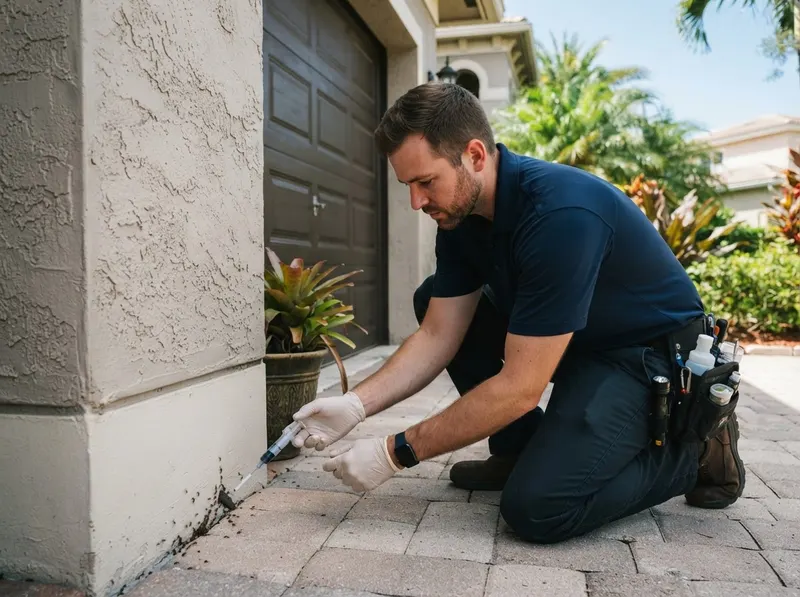
Defense protocols deploy dual-phase perimeter fortification aligned with the EPA Office of Pesticide Programs application guidelines. Phase one establishes a subterranean and exterior perimeter shield around the foundation slab, hose bibbs, and soffit edges using non-detectable liquid transfers. Phase two deploys systematic, matrix-balanced sweet hydro-gels along protected interior voids, keeping non-staining, odor-free compounds away from food preparation counters. Moisture tracking adheres to standards outlined by the Florida Department of Agriculture and Consumer Services Chapter 5E-14 for structural pest defense, pinpointing air-conditioning condensation lines and irrigation heads near property lines along Prospect Park and Royal Palm Isles that furnish the high humidity levels these species demand for survival.
Property infrastructure in Corals and Central Corals often contains mature landscaping abutting foundation walls, which accelerates honeydew-producing scale insect populations that feed trailing ants outside. Coordinating perimeter tree canopy maintenance under guidelines established by the International Society of Arboriculture with targeted pest management neutralizes external nutritional sources. For high-density multi-family properties along Dixie Highway, coordinated structural exclusion following the National Pest Management Association residential standards prevents re-infestation across shared architectural firewalls, ensuring complete internal eradication without continuous broadcast chemical residues.
Every job gets a firm, written price after a free on-site visit.
For standards, safe disposal, and service guidance on pest control services in Oakland Park, FL, useful references include U.S. EPA, ENERGY STAR, U.S. Dept. of Energy, Consumer.gov, U.S. Census Bureau, and Google Maps. General consumer and small-business resources are available from USA.gov, Better Business Bureau, FTC Consumer Advice, U.S. Small Business Administration, and Ready.gov.
Tell us about your ghost & white-footed ant eradication job in Oakland Park and we'll send a clear, written quote, usually the same day.
 HomeFront Pest Solutions