Securing durable pest control services in Oakland Park requires deploying active perimeter barriers engineered specifically for Broward County's humid maritime ecosystem. HomeFront Pest Solutions establishes non-repellent exterior chemical zones and physical exclusion seals that intercept aggressive subterranean termites, foraging ghost ants, and opportunistic roof rats before structural integrity is compromised.
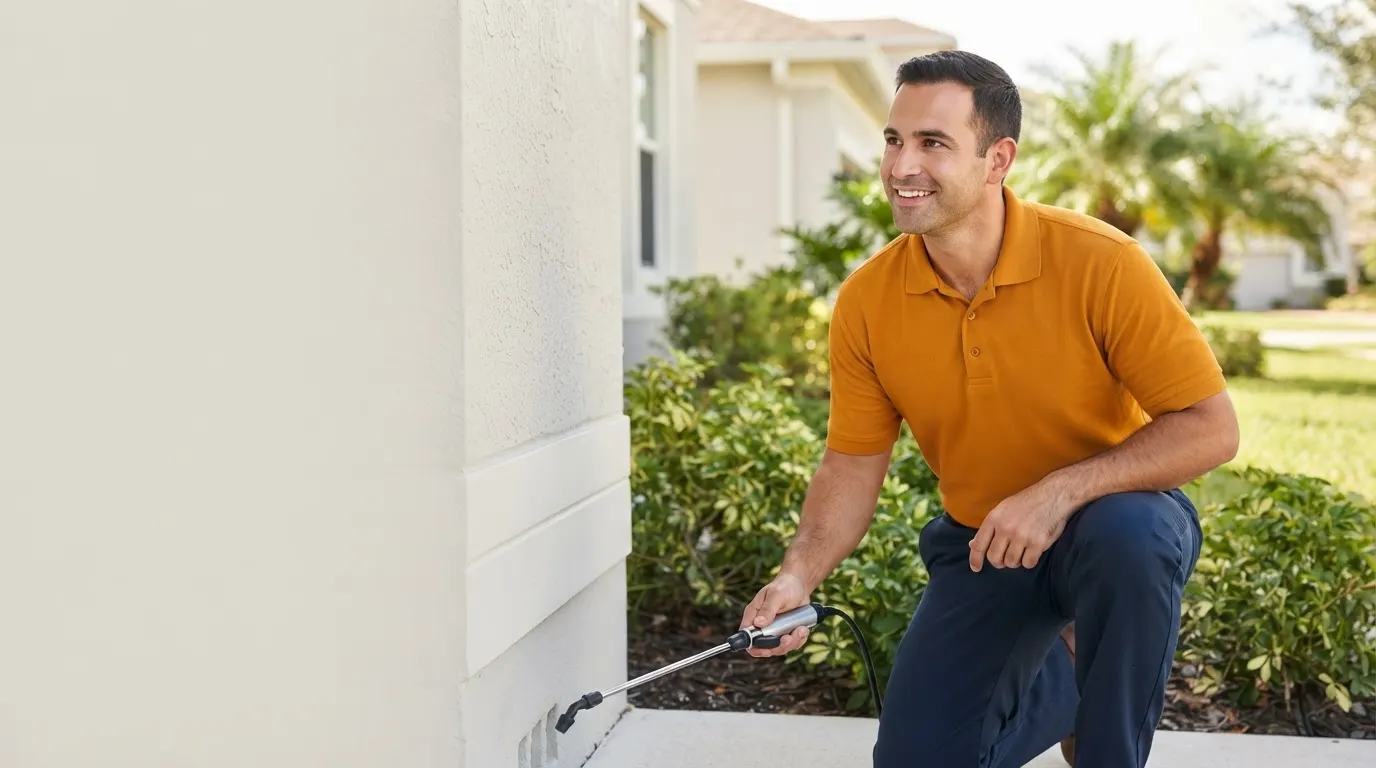
Pest control services in Oakland Park is an intensive structural defense and integrated biological management protocol that identifies, suppresses, and mechanically excludes invasive subtropical pests from residential foundations, attic voids, and commercial properties.
Every service reflects the same meticulous attention to detail, whether it's a single job or a larger pest control services project across Oakland Park.
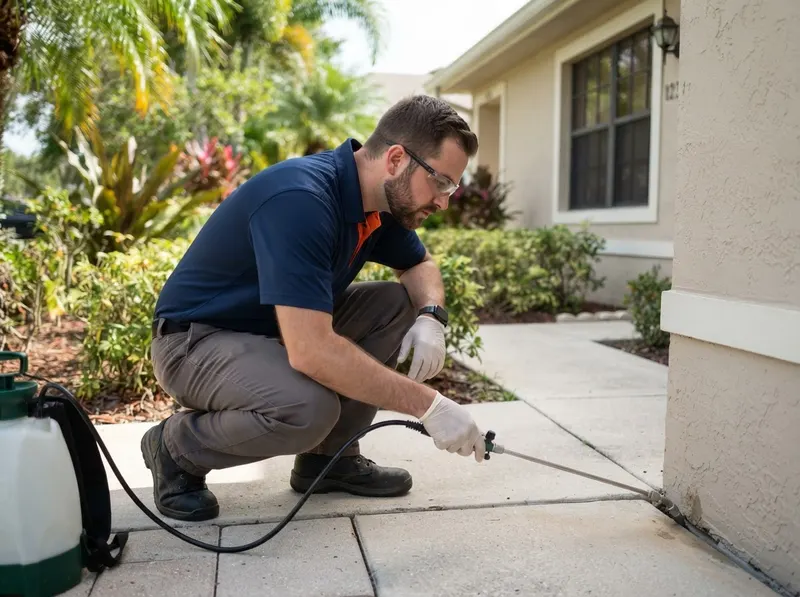
Quarterly defensive barriers surrounding your foundation to eliminate ants, roaches, spiders, and silverfish. We apply microencapsulated non-repellent liquids and remove exterior spider webs and wasp nests to preserve exterior entryways. The treatment establishes an active 10-foot perimeter barrier extending three feet up the exterior masonry walls and seven feet outward across turf, concrete pathways, and landscape gravel. Macro-molecular encapsulation protects the active botanical compounds from breaking down under intense South Florida ultraviolet radiation and persistent 90-degree summer heat indexes. Specialized formulations target crawling arthropods crossing foundation lines, transferring lethal microscopic doses back to outdoor colonies through grooming behavior. Formulations conform to non-target exposure standards outlined by the EPA Pesticide Safety Program , maintaining chemical stability through heavy coastal precipitation.
Get a quote →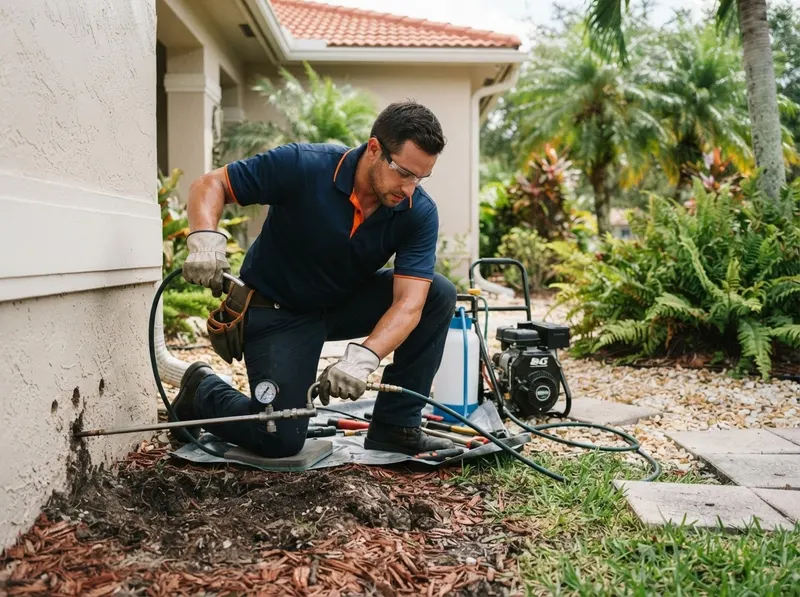
Complete subterranean and drywood termite prevention utilizing non-disruptive liquid soil barriers, specialized borate wood treatments, and localized foaming designed to stop structural wood consumption without vacating the property. Subterranean treatments utilize non-repellent liquid termiticides applied through 6-inch by 6-inch soil trenches excavated directly against exterior structural footings, creating a continuous subsurface defense barrier. For concrete slabs, driveways, and abutting patio foundations, technicians execute precision sub-slab drilling through the masonry at 12-inch intervals to inject protective solutions into the underlying fill soil. Structural attic framing and wall studs receive direct applications of water-soluble disodium octaborate tetrahydrate, penetrating cellulose fibers to permanently prevent drywood termite feeding. All chemical deployment and subterranean barrier depths adhere to structural pest guidelines overseen by the FDACS Division of Agricultural Environmental Services .
Get a quote →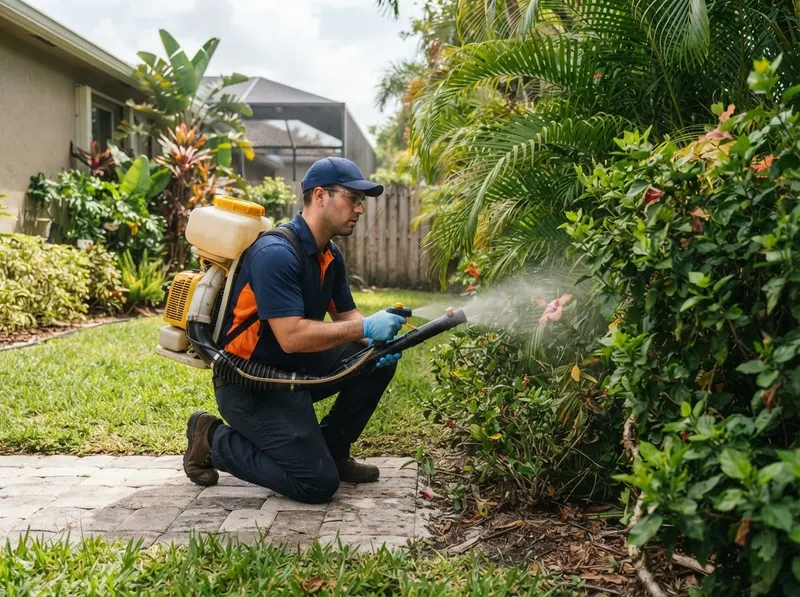
Monthly foliage misting and biological larvicide distribution throughout shaded landscape vegetation to disrupt the mosquito breeding cycle, dramatically reducing biting adult populations around patios and outdoor entertainment zones. Technicians employ specialized ultra-low-volume gas-powered backpack foggers to mist the undersides of dense ornamental broadleaf shrubs, sea grape foliage, areca palms, and perimeter hedges where female mosquitoes harbor during daylight heat. Standing water features, bromeliad plant cups, drainage basins, and canal bank runoff areas are treated with Bacillus thuringiensis israelensis (Bti) biological larvicide dunks that eliminate aquatic mosquito larvae within 24 hours without harming birds, reptiles, or aquatic wildlife. Treatments systematically mitigate invasive Aedes aegypti vectors in accordance with environmental health practices promoted by the CDC Mosquito Control Guidelines .
Get a quote →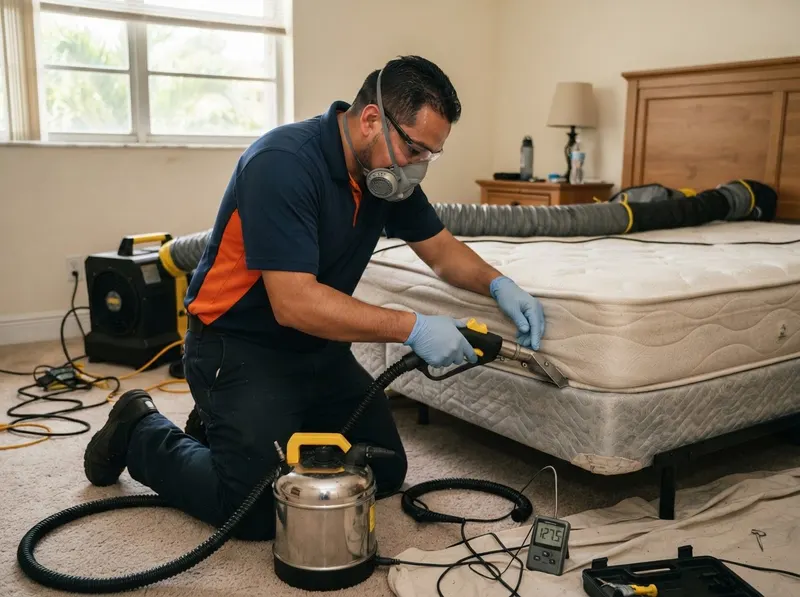
Targeted heat and residue eradication that elevates ambient mattress, wall cavity, and baseboard temperatures above lethal thresholds to neutralize bed bug adults, nymphs, and eggs in a single comprehensive application. Specialized electric and indirect-fired industrial heaters circulate dry convection heat between 120 and 135 degrees Fahrenheit throughout living quarters while calibrated digital temperature probes continuously monitor structural thermal penetration. Powerful high-velocity air movers push lethal hot air currents into deep structural hollows, under carpet tack strips, behind electrical faceplates, and inside mattress core assemblies. Because excessive heat compromises bed bug cellular membranes instantly without relying on chemical absorption, this non-toxic process eliminates insecticide-resistant strains completely. Protocols follow technical sanitation recommendations documented by the Virginia Department of Agriculture Bed Bug Taskforce .
Get a quote →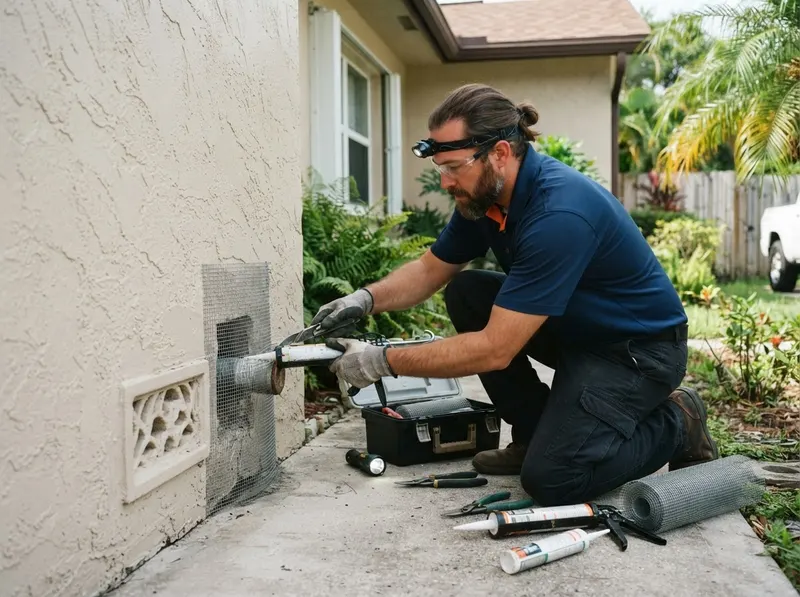
Full-structure physical exclusion sealing roof transitions, soffits, pipe penetrations, and vents with galvanized steel mesh, followed by sanitary indoor trapping and enzymatic deodorization to resolve roof rat infestations. Roof rats exploit tropical tree branches to access rooflines, chewing through wood fascias, plastic roof louver vents, and AC chase penetrations. Technicians seal every structural vulnerability larger than a quarter-inch using heavy-gauge welded steel hardware cloth, elastomeric structural sealants, and metal flashing to establish a permanent physical armor. Interior attic insulation is systematically trapped using mechanical snap traps positioned along identified rodent runways, eliminating attic populations within 7 to 10 business days. Contaminated droppings, urine trails, and pheromone nesting zones are neutralized with hospital-grade broad-spectrum biocides, reflecting sanitation guidelines established by OSHA Occupational Safety and Health Standards .
Get a quote →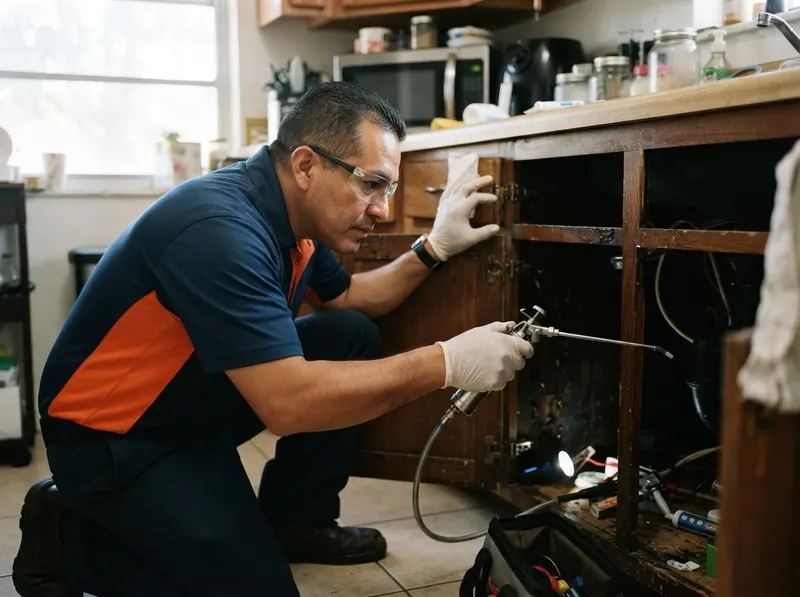
Intensive multi-stage kitchen and bathroom eradication combining insect growth regulators, precision gel matrices, and vacuum extraction to eliminate heavy cabinet and appliance harborage without broad broadcast spraying. Infested kitchen environments, refrigerator motor housings, microwave interiors, and plumbing wall service access panels undergo initial HEPA-filtered vacuum extraction to instantly remove reproducing females, egg cases, and aggregation frass. Technicians apply micro-beads of indoxacarb, dinotefuran, or abamectin bait matrices into unexposed structural crevices, hinge voids, and cabinet corners away from human contact zones. Formulations include synthetic juvenile hormone mimics that arrest nymphal molting, causing irreversible sterile adult deformities that extinguish multiplying populations, meeting domestic hygiene standards established by the HUD Office of Lead Hazard Control and Healthy Homes .
Get a quote →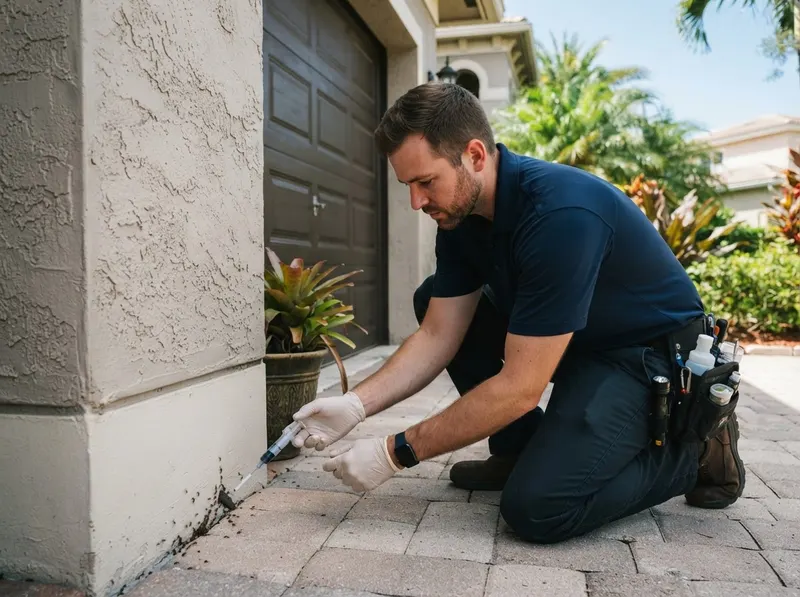
Specialized sweet-protein liquid and granular bait matrix distributions formulated to systematically suppress trailing ghost ants (Tapinoma melanocephalum) and white-footed ants without scattering foraging lines. Ghost ants thrive in South Florida wall voids and kitchen pantries, trailing along electrical lines and water supply pipes. Because these polydomous species sustain hundreds of interconnected satellite nests across a single property, over-the-counter contact sprays trigger emergency reproductive budding that exponentially worsens infestations. HomeFront Pest Solutions deploys low-toxicity liquid sucrose bait reservoirs along structural foraging paths, enabling worker ants to ingest and transport non-repellent active ingredients back to hidden queens and brood chambers, collapsing the entire colony network within two to three weeks without toxic indoor spray residues.
Get a quote →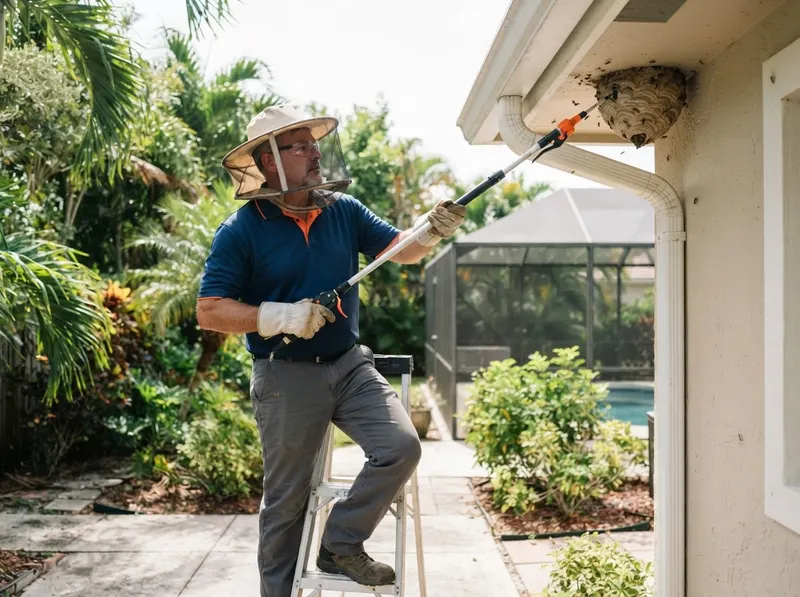
Safe tactical elimination and mechanical removal of aggressive paper wasp nests, mud daubers, and yellow jacket colonies established beneath soffits, clay tile eaves, and patio overhangs. South Florida's warm climate encourages continuous nesting cycles along second-story gutters, utility boxes, and pool enclosure super-gutters. Certified technicians utilize specialized telescoping applicator poles to deliver pinpoint aerosol freezes and pressurized insecticidal dusts directly into subterranean or elevated nest structures, neutralizing stinging insects immediately on contact. After insect activity ceases, technicians mechanically scrape away physical nest structures, clean residual clinging mud, and apply targeted microencapsulated repellent sprays to nesting surfaces to discourage recurring structural colonization.
Get a quote →You get a firm, itemized quote for your pest control services before any work begins, no surprises, no pressure.
Careful prep, tidy work, and a full cleanup when we are done. We treat your home and belongings like our own.
The same trusted, background-checked team from the first call to the final check.
Selecting the proper defense profile depends on current activity levels and property design. If you need immediate suppression of an active interior infestation like German cockroaches, choose targeted botanical baiting and crevice injection. If you want year-round preservation against structural decay, choose an exterior non-repellent perimeter barrier paired with annual termite monitoring.
The trade-off is upfront installation investment versus recurring interior intrusion risks; exterior perimeter barriers prevent pests from entering living zones entirely, whereas reactive interior treatments address bugs only after they have already penetrated kitchens and sleeping areas. If managing a property with mature landscape overhangs, choose mechanical rodent exclusion over chemical baits alone; the trade-off is a higher initial carpentry labor investment versus the persistent hazard of attic carcass decay and secondary pest blooms. When handling subterranean termites near shallow coastal water tables, liquid non-repellent soil trenching provides a continuous defensive apron along foundation footings, whereas localized bait stations offer targeted exterior interception points.
Soil treatments demand higher physical trenching labor around landscaping and patio slabs, while external bait stations require ongoing quarterly inspection schedules and regular cartridge replacements to ensure active consumption by foraging workers. For multi-family duplexes and rental units facing pervasive German cockroach migrations through shared plumbing chases, insect growth regulators combined with indoxacarb gel baits deliver systemic nest collapse. The trade-off is a controlled 14 to 21 day population reduction curve rather than the deceptive instant knockdown of contact pyrethroid sprays, which routinely trigger reproductive colony dispersal and drive surviving females deep into interior wall cavities.
In properties experiencing heavy seasonal perimeter pressure from bigheaded ants or Caribbean crazy ants, broadcast granular perimeter treatments combined with targeted structural barrier sprays establish a persistent repellent boundary across mulch beds and turf perimeters. The trade-off involves adhering to strict weather-dependent application windows to avoid heavy tropical rain wash-off, compared to less weather-sensitive interior treatments that fail to solve the exterior landscape nesting reservoirs that continuously replenish indoor foraging trails. Homeowners seeking complete structural resilience must weigh the labor-intensive initial investment of total physical exclusion and continuous barrier maintenance against the ongoing material expense and operational frustration of recurring emergency indoor chemical interventions.
Every project gets a firm, written price after a free on-site visit. Ranges below for orientation.
Tell us about your pest control services job and we'll send a clear, written quote, usually the same day. Or just call and talk to a real Oakland Park pro.
(754) 205-1669
Oakland Park's elevated water table and extensive canal infrastructure, particularly around Royal Palm Isles and Lloyd Estates, generate exceptional biological pressures that standard extermination fails to stop. Mid-century single-story CBS homes throughout Corals and North Andrews Gardens frequently feature crawl spaces, tongue-and-groove ceilings, and settled slab transitions where moisture breeds subterranean termites and ghost ants year-round. Our tactical protocols target the specific thermal conditions of Broward County, stopping pests at exterior landscaping boundaries near landmarks like Easterlin Park before they cross into residential insulation. The municipal landscape features sprawling water networks managed in accordance with hydrological monitoring standards set by the South Florida Water Management District. Along North Andrews Avenue, commercial corridors and older single-family residences experience distinct pest profiles. The extensive tree canopies surrounding Wimberly Field and North Andrews Gardens Community Center provide direct highway access for roof rats, which traverse live oak branches and royal palm fronds directly to reach asphalt shingle roofs and barrel-tile eave gaps. Meanwhile, high-density residential developments in Oakland Forest and Lake Ridge Falls deal with relentless bigheaded ant supercolonies nesting deep within interconnected decorative mulch beds, rock borders, and automated irrigation manifolds. In areas adjacent to Funky Buddha Brewery and the central culinary district on North Dixie Highway, municipal sanitation patterns and food preparation activities draw resilient German cockroach populations that require mechanical exclusion rather than simple chemical surface spraying. Concrete block foundations built between the 1950s and 1970s in Central Corals often display settling fractures along stem walls and patio slabs. These subterranean entry cracks allow eastern subterranean termites and Caribbean crazy ants to migrate undetected beneath vinyl plank and ceramic tile flooring. Our specialized exterior barriers account for these architectural vulnerabilities by establishing deep, continuous defensive perimeters along foundations, stopping invasive colonies before they compromise structural framing or living spaces.
Free estimates for Oakland Park & the surrounding area.
For standards, safe disposal, and service guidance on pest control services in Oakland Park, FL, useful references include U.S. EPA, ENERGY STAR, U.S. Dept. of Energy, Consumer.gov, U.S. Census Bureau, and Google Maps. General consumer and small-business resources are available from USA.gov, Better Business Bureau, FTC Consumer Advice, U.S. Small Business Administration, and Ready.gov.
 HomeFront Pest Solutions